

blog
January 13, 2026 | Source: Rapid Micro Biosystems, Inc.
Accelerating CAR T cell therapy release testing with rapid microbial detection methods
POSTED BY Rapid Micro Biosystems | 13 minute read
.jpg "Rapid Micro BioSystem")
Learn more by getting in touch with Rapid Micro Biosystems today

Learn about the important advantages Growth Direct offers your facility

Time is one of the biggest challenges in the development and release of Advanced Therapy Medicinal Products (ATMPs), such as CAR T cell therapies. Patients receiving these treatments are often critically ill — potentially representing a last treatment option for them, and the longer they need to wait for their therapy to be manufactured, the greater the likelihood of their condition deteriorating.
Minutes, hours and days count.
Even small delays can narrow the treatment window and affect clinical outcomes.
Microbial detection is a major bottleneck in CAR T release testing, with traditional sterility testing methods taking 14 days or more to confirm a batch is contamination-free, keeping a potentially life-saving product stuck in QC. The introduction of new manufacturing and testing methods, including automation and rapid testing, could allow for more efficient, timely release.
In a recent webinar, Irving Ford, former Adaptimmune Quality Executive, and Owen Griffin, Senior Director of Microbiology at Rapid Micro Biosystems, explained how manufacturers can shorten release timelines using just-in-time and expedited release strategies. They also described considerations at each stage of the process, and how rapid microbial detection technologies such as Growth Direct® can reduce testing time and help therapies reach patients faster.
Below, we outline the key points discussed in the webinar.
Watch the full webinar, Just in Time Release of CAR T Cell Therapies, on-demand
There are two accelerated release approaches that can help shorten the time to deliver CAR T treatments:
In both cases, Annex 1 and ATMP guidance emphasize an expectation that the chosen release strategy is grounded in risk-based decision-making and the importance of patient protection. With this in mind, there are three foundations that must be built to support either pathway:
With these elements in place, manufacturers can better understand where microbial risks arise and how to control them.
To confidently implement just-in-time or expedited release, it’s important to understand where microbial risk sits across the workflow and ensure the proper controls at each stage.
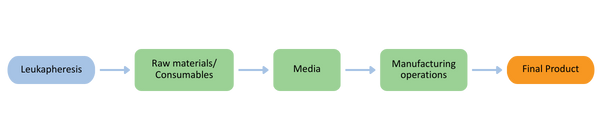 Fig 1: The phases of a typical CAR T-cell manufacturing process
Leukapheresis involves collecting a patient’s white blood cells — often the highest-risk point for adventitious microbial contamination, because the greatest threat typically comes from the patient material itself. If there is contamination, a repeat collection may not be possible, and patient cells may fail to grow during manufacturing.
To manage this risk, absence-of-contamination testing should be performed at the collection center and again on receipt at the manufacturing site, providing early confirmation that the material is suitable to proceed and giving valuable data for any future contamination investigations.
Components that come into contact with the product should be sterile, single-use, and sourced from qualified suppliers with certificates of analysis confirming sterility and stability. Robust incoming inspection and release programs can help maintain control over what enters the cleanroom, supported by effective sanitization procedures for transferring items into classified areas. Any adventitious contamination should be detected upstream through raw material testing, ensuring these inputs present a low risk to both process and patient.
Any manipulations involving media should be carried out in an ISO 5 or Grade A environment, or within closed systems. All media and supplements must be sterile and supported by a risk-based environmental monitoring program, including personnel monitoring.
As media handling steps are often short and sterile filtration can be verified through filter integrity testing, additional microbial testing at this stage may not always be required. Overall, the media step should contribute minimal adventitious contamination risk, with issues identified earlier in the workflow wherever possible.
At this stage, high-risk aseptic manipulations should again take place in ISO 5 / Grade A conditions, supported by sterile single-use consumables, strict area-specific gowning, and a risk-based environmental monitoring program. These manipulations are generally short, but personnel contact — especially gloved hands — and the organisms typically recovered in ISO 5 / Grade A areas represent the most likely source of adventitious contamination, making strong aseptic processes essential.
When evaluating suitability for just-in-time or expedited release, the manufacturing process should demonstrate a low overall contamination risk, with robust controls to prevent cross-contamination between patient lots. The key concern, if contamination is detected here, is the delay it causes for the patient awaiting treatment.
Final-product manipulations are generally low risk and short in duration, with any critical steps carried out in ISO 5 / Grade A conditions. Sterile, single-use consumables and appropriate gowning remain essential, and a cell protectant is typically added before the product is prepared for cryogenic storage. By this point, the risk of adventitious contamination should be low, as most opportunities for microbial entry occur earlier in the process.
CAR T release testing at this stage may include endotoxin, mycoplasma, and rapid microbial detection methods, helping to provide the level of assurance needed to support just-in-time or expedited release.
Watch the webinar to learn more about the key considerations of the CAR T cell manufacturing process
Traditional testing methods are manual processes that can take as much as 14-21 days to complete and rely on subjective interpretation of microbial growth. They are slow, prone to human error, difficult to scale, and offer limited data integrity. For ATMPs like CAR T cell therapies, this makes compendial testing unsuitable, driving the need and expectations for validated rapid methods.
To accelerate CAR T release testing and enable just-in-time or expedited release strategies, automated rapid microbial detection methods are the way forward. The Growth Direct system is one such solution — a fully automated, growth-based microbial detection platform that integrates incubation, imaging, and data capture into a single workflow to identify contamination far earlier in the QC process.
In practice, growth-based rapid methods can typically cut time-to-result (TTR):
Growth Direct combines automated incubation with advanced digital imaging that continuously monitors plates throughout incubation. Microbial cells naturally fluoresce under blue light, allowing the system to detect colonies long before they are visible to the naked eye. The system’s automated software identifies and enumerates colonies in the familiar CFU format, enabling detection at around 100 cells rather than the millions typically required for visual reading.
As the imaging system captures and analyzes plates every four hours, Growth Direct® can identify microbial growth in as little as 12 hours and typically delivers results in as little as one to three days.
Today, the Growth Direct platform is deployed at over 100 sites globally, including the majority of the top 20 global pharma companies and most CAR T cell therapy manufacturers, helping them release products and get them to patients faster.
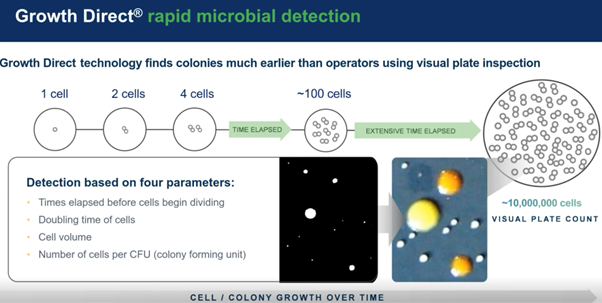
Fig 2: Growth Direct® can detect microbial growth much quicker than traditional visual plate count methods.
Get in touch today to see how the Growth Direct® system could benefit your lab
Across all microbial detection applications — environmental monitoring, bioburden testing, water testing, and sterility testing — the Growth Direct platform is engineered to meet global regulatory expectations, including FDA, EU and ISO requirements.
The system undergoes strict validation using ISO-governed consumables, with RMB’s specialist team providing standardized protocols and on-site support. It also provides fully traceable, 21 CFR Part 11–compliant electronic records with secure audit trails to ensure data quality and integrity. Plus, because it uses the established CFU format, results align with familiar microbiology practices and existing acceptance criteria, making adoption straightforward.
The platform also fits seamlessly into your existing QC workflows. Instead of changing how samples are prepared or which media are used, Growth Direct simply automates the incubation, detection, and data capture steps that traditionally slow laboratories down. Plates are loaded in bulk and processed without manual intervention, which reduces error and frees up technician time. Its ability to integrate with common LIMS platforms and its intuitive interface mean you can continue working as you do today, only with faster, more reliable results.
To unlock the full potential of CAR T cell therapies, labs need to adopt modern automated tools and methods that accelerate the safe development and delivery of ATMPs, supported by clear ROI models and business cases that help stakeholders justify investment in rapid microbial methods.
Platforms such as Growth Direct help reduce bottlenecks in CAR T release testing without increasing risk, while supporting just-in-time and expedited release so that patients can receive these life-saving therapies as quickly and safely as possible.
Interested to learn more? Watch the full webinar, or request a demo to see how Growth Direct® can accelerate your sterility testing

