the rapid blog

Attend a Hands-on Workshop

ClicktoRegister resized 202

Subscribe by Email

Your email:

Connect with us

Rapid Micro Biosystems Blog

Current Articles | RSS Feed RSS Feed

Automated Rapid Detection in a Model Sample Matrix for Flu Vaccine

Customers often come to use with "unique" products for testing using the Growth Direct technology.  Part of role of the Rapid Micro Biosystems Technical Services team is to perform feasibility studies on certain types of samples to determine how it would be tested on the Growth Direct System and what rapid detection results are acheived. The team has a well-defined set of processes to test samples and present the information in the form of an application note.  

As I mentioned above, these studies are sometimes driven by our customers, but we regularly perform our own internal feasibility studies to test the limits of the Growth Direct System and our rapid retection technology.

Below is a study focused on a model matrix for the influenza virus.  The study is also in the rapid library

Background:

The manufacture of influenza vaccine has four major steps: virus propagation, harvest and processing, blending of bulk stocks, and final fill of the finished vaccine (Fig. 1). Influenza virus is traditionally grown using chicken eggs inoculated with seed virus, though cell culture-based methods are now becoming established. Whether egg- or cell culture-based methods are used, propagated virus is then harvested and processed to extract and purify the specific viral subunits required to produce mono-valent bulk stock for vaccine. These stocks are subsequently blended into trivalent bulk which is loaded into the final packaging for release.

Throughout the manufacturing process an assortment of microbial QC assays must be performed to confirm that microbial contaminants are maintained within appropriate limits (e.g. purification steps), or have been completely removed (e.g. final fill). Fig. 1 lists the types of testing performed during each major step of vaccine manufacture. Additionally, environmental monitoring (EM) consisting of air, surface and personnel testing is carried out throughout production to confirm that the manufacturing process is performed under controlled conditions. Microbial QC testing requires from 3 to 14 days to complete, is performed at multiple production steps, and progression to each subsequent step may be contingent upon passing these lengthy tests (e.g. 14 days for sterility); consequently such testing can have significant additive impacts on the production cycle. These procedures also require substantial resources (i.e. labor and materials) to perform. Thus, reducing the turn-around times for microbial QC results could have a significant impact on influenza vaccine production cycle time, costs, and the timing of product distribution to the market.
StepsInVaccineProductionandQCTesting

Application:

The Growth Direct™ System for rapid microbial enumeration addresses all the applications required for microbial QC testing in vaccine manufacture. It uses the same principles and methods as the compendia, thus avoiding the extensive validation work often found with other rapid testing platforms, while fully automating incubation, sample handling, analysis, and results reporting.

Only sample preparation is performed by the user (i.e. standard membrane filtration method). Finally, it is a non-destructive test; this attribute allows subsequent microbial ID, a necessity for root cause investigation and contamination prevention.

ColonyCorrelationEggWhite
Conclusion:

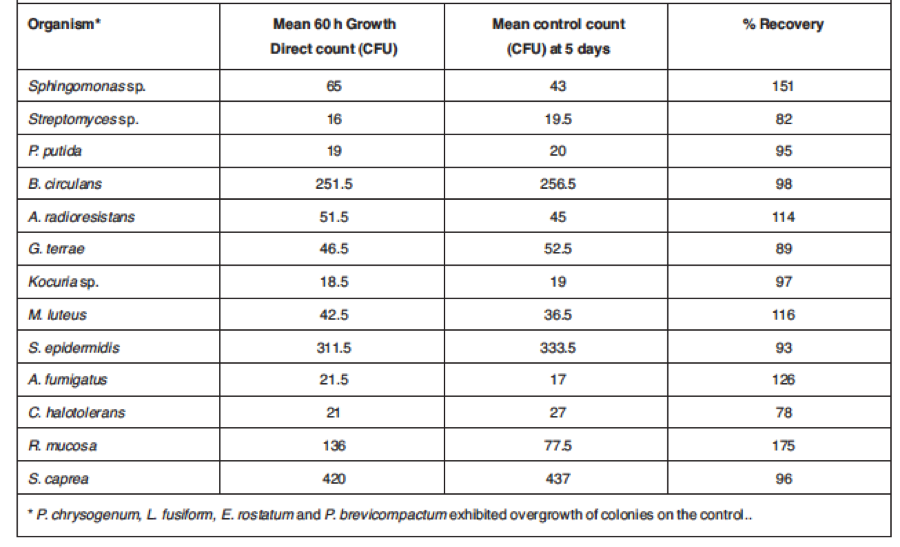
This study demonstrates that microbial contaminants in egg white, a model matrix for allantoic fluid, can be rapidly analyzed on the Growth Direct system. Equivalent numbers of colonies were detected by the Growth Direct in 13 hours as were counted via the culture method after 24 hrs: a 50% time savings. Such time savings combined with lower labor costs and improved compliance from system automation can:

  • Significantly lower manufacturing costs by reducing hold times between manufacturing steps and speeding release of product.
  • Free-up personnel to perform other, higher value tasks.
  • Reduce product scrap by reducing response times to microbial contamination.
  • Improve overall QC, QA and manufacturing efficiency.

These benefits can result in a payback on the initial investment of the Growth Direct system of two years or less, due to the resulting substantial improvements in efficiency and productivity, and cost savings realized by the vaccine manufacturer.

Growth Direct Workshop in Munich, Germany on Thursday 14 March, 2013

As we have written previously in this blog, following the announcement of the 2013 availability of the Growth Direct System for applications including automated rapid sterility, environmental monitoring, water and bioburden testing, Rapid Micro Biosystems began hosting 1 day workshops for participants to see the technology in action and speak with the Rapid Micro Biosystems team. 

The feedback we have received from attendees has been very positive.  Each saw the event as a valuable learning experience.  

Rapid Micro Biosystems is hosting the same workshop in Germany, just 20 minutes from the Munich airport.  This will be the first of many such workshops, so if you are unable to attend on 14 March, continue to visit our workshop page for new dates.  The agenda for the event is posted below.

We hope to see you there!

1000 - 1030 -- Arrival and light snacks

1030 - 1100 -- Introduction to the Growth Direct System

1100 - 1200 -- Demonstration of the Growth Direct System Device

1200 - 1300 -- Lunch Served

1300 - 1345 -- Environmental Monitoring Demonstration

1345 - 1430 -- Sterility Demonstration

1430 - 1500 -- Break

1500 - 1545 -- Water and Bioburden Demonstration

1545 - 1630 -- Services Capabilities and Validation Approach

1630 - 1645 -- Wrap up and Q&

Tags: 

The Growth Direct System -- what do the regulators think?

In the months since we announced the 2013 availability of the Growth Direct™ System for multiple applications we have received a lot of positive feedback and many questions around the technology. One of the most common questions is, “Are regulators receptive to new RMM technologies and has this technology been reviewed by regulators?”  Well, based on presentations delivered by regulators during conferences, the regulators consistently encourage companies looking into rapid methods to talk to them about validation plans.  That openness emphasizes their receptivity for making changes from current, manual methods. A great example of their openness is the recent changes to CFR 610 rules around updates to sterility testing. 

We have had the opportunity over the last few months to interact directly with regulators through facilitated global training courses for the IMB, FDA, and EU authorities.  Through PIC/S (The Pharmaceutical Inspection Convention and Pharmaceutical Inspection Co-operation Scheme) organization we presented a session just last week to 25 regulators representing major countries in Europe (Germany, Sweden Spain, Belgium, Poland, Czech Republic) plus Indonesia, and Brazil. 

After learning about our technology and its similarity to current compendial testing, the regulators provided feedback that our technology is the most straightforward of rapid methods from a validation perspective.  

During our presentation, we went into detail describing the technology for our water, bioburden, environmental monitoring and sterility testing applications.  We explained to the regulators that our technology breaks into two parts from validation perspective.  The first component is the automated incubation and colony counting, and second is the growth based media used for the samples.

We explained what we saw as the key validation requirements for businesses around each application:
--  For water and bioburden testing, customers have already validated our method for routine use.  Our method is exactly as performed in the current pharmacopeia
--  For environmental monitoring, the only difference from the traditional method is our use of a membrane for organism capture.
--  For sterility testing, the only impactful difference is the use of a different media

The approaches we described for the regulators for each application was confirmed to be acceptable. 
--  The validation of the automation and colony counter required a demonstration of the accuracy of the system compared to the standard operator. 
--  The validation of the growth-based component requires proof of equivalence of the membrane for the micro-organism capture for EM and growth using the new media vs. current media in sterility.  Accuracy of microbial detection is required through microbial spike and recovery [e.g. B &F Testing for sterility} experiments with suitable replicate numbers to allow estimates of accuracy with suitable precision for statistical analysis.

If you are someone thinking about rapid methods, the information we have learned can give you the confidence in a few areas. First, you are taking on a technology that can be validated to regulatory requirements. Second, the validation technique is well known to your company’s QA group. Third, the validation process will be shorter than alternative RMM methods.  

The regulatory agencies have consistently shown their willingness to work with companies through the process to help bring new technologies to microbial testing and the number of successful qualifications on sites increases every year with concomitant financial payback. 

Growth Direct System on Display at PDA Microbiology Conference

Last week was extremely exciting for Rapid Micro Biosystems.  For the first time we displayed our Growth Direct™ System (available in 2013) at our booth during the 2012 PDA Microbiology conference in Bethesda Maryland. 

2012 PDA Booth

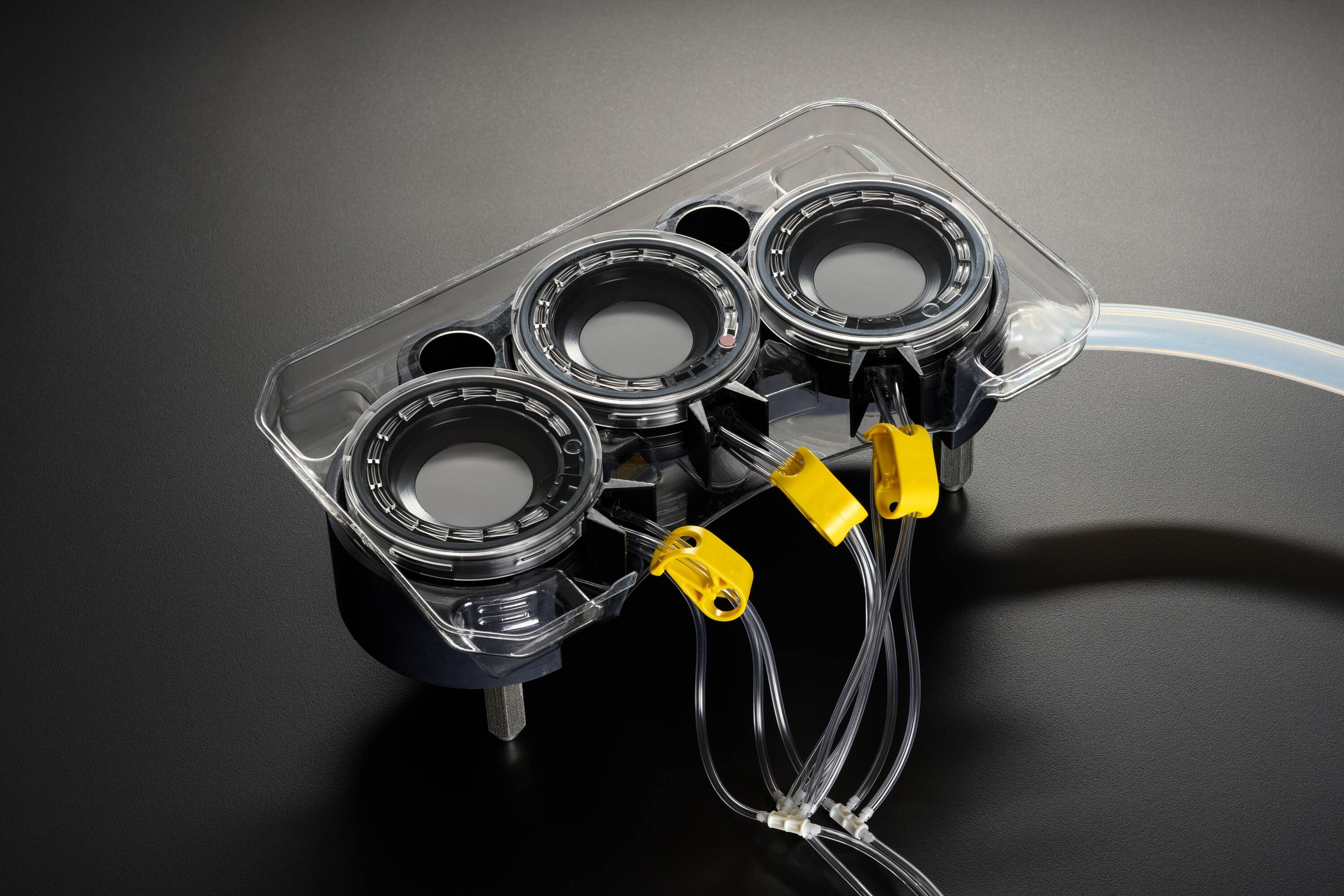
This presented a great opportunity for the microbiology experts in attendance to see an operating Growth Direct™ System in person . During the breaks, we demonstrated the automated capabilities of the system as we scanned and loaded cassettes.  We were able to show attendees the 2 incubators where the cassettes were stored after loading.  Next, the cassettes were automatically transferred to the imaging chamber where they were analyzed for growth, and then returned to the incubator.  

Our short demonstration highlighted the value that automated, non-destructive detection and automation can have to microbial quality control labs. 

We will continue to hold our workshops in Bedford, MA for anyone interested in seeing the new Growth Direct System in action.  

Thank you to everyone that was able to stop by our booth during the show. 

Workshops on Rapid Detection in Sterility and Environmental Monitoring a Success

On August 16th we hosted our third official Growth Direct™ workshop since we announced the 2013 availability of the Growth Direct™ Systems for Environmental Monitoring and Sterility.Honestly, we did not expect a large turnout for the August 16th session, given that it is the middle of the summer and everyone is on vacation.  We were extremely pleased with the number of attendees and with the positive feedback from the participants.

KateAndSterilityTubing web

If you weren’t aware, we are hosting half-day workshops featuring our new system and consumables for automated, non-destructive rapid sterility testing and environmental monitoring.

Sarath Demonstrates Device 

Attendees participate in hands-on demonstrations of our new instrument and new consumables and are able to interact directly with the teams heading development of these technologies. 

I am posting a few pictures take during the workshops.  The feedback has been positive.  One person noted, “I enjoyed the interaction and meeting of the minds," while another enjoyed the, “Engaging discussions on functionality and validation approach.”

We will be hosting 2 more of these events in September, and will add new dates for Q4 of this year and Q1 of 2013.  If you are in the Boston area, or traveling to Boston, please make it a point to attend the session.  You will not be disappointed, and there is a free lunch!

Automated Rapid Detection and the Power of the Positive

Please welcome a guest poster to our blog. Anna Mills, our European Field Application Specialist, brings a wealth of knowledge and expertise in the area of rapid detection. 

Power of the positive

Microbial quality control in pharmaceutical manufacturing is all about zero.  The best news you can get about a sample is that it has a CFU count of 0.  It is counterintuitive to think that positive is bad, but anyone who has been involved in an investigation knows that a positive is the last think you want.  The big problem is the waiting game for that positive or negative result. 

The good old traditional test relies on a specific amount of incubation time before taking your sample and either reading get your result. Rapid Methods have accelerated this, but it is still a waiting game. Because of this even if you are getting an answer more quickly you are not necessarily aware as it happens.  What if you could learn that a sample has positive growth within hours, and could continue to let the sample incubate and grow to an endpoint where you could do identification?  That’s the power of the positive!

The Growth DirectTM Technology is a prime example of the power of the positive.  A sample is analyzed every few hours and can indentify growth quickly.  Compare that to the long wait in the traditional method.  Because Growth Direct™ includes automated analysis and alerting, positive results can be sent via email so you can take the quickest possible action in case of a failure in your lab.

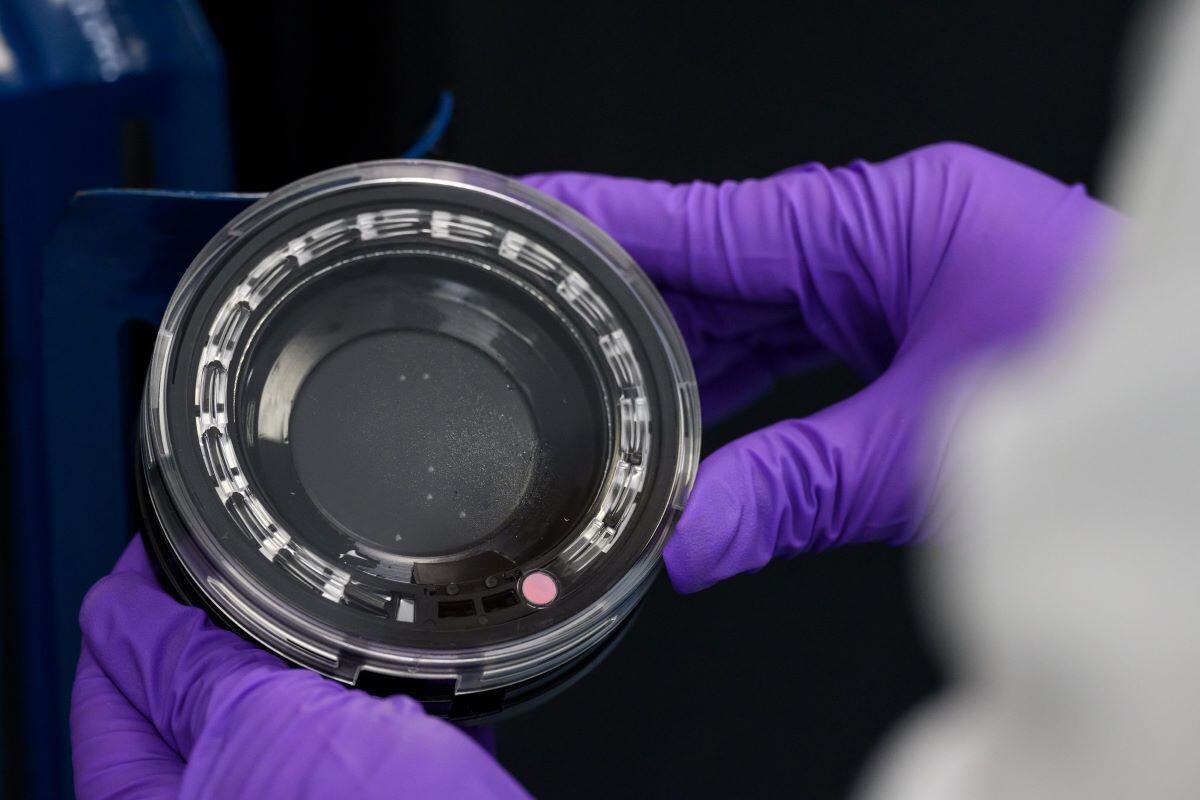
The Growth Direct™ System uses agar cassettes to promote the growth of the bugs it means that growth of the colonies can continue in the Growth Direct’s built-in incubators until they are visible to the naked eye thus providing you with a purity plate so that you can ID the distinct colonies directly .    As an example, below is a small assortment of the bugs with their average time to detection in the traditional method versus the Growth Direct technology.

GrowthDirectTimeToDetectionWhat would it mean to you if you could pick up growth of certain bugs within the day?

What about slow growers? The difference between the Growth Direct™ time to positive and the traditional time to positive with slow growing organisms is often even more marked, for example we have found that Methylobacterium extorquens would grow (using a sterility turbidity format)in around 17.2 days ±3.2 days raising the question of how valid our compendial 14 day sterility test is.  However when we put this same organism onto the Growth Direct System we get a huge improvement in reading times, detecting it in 2.6 days ±0.7 days. 

We are excited to expand the power of the positive to sterility and environmental monitoring testing next year.  While a positive is bad, knowing about a positive sooner is definitely good.


New Opportunities for Automated Rapid Sterility Testing

Many of you may already know that the FDA has relaxed its sterility test requirements for biologics.  Several sites have commentary, including here and here.  The most encouraging bit of information is that the FDA cited advances in analysis methods (i.e. Rapid Methods) as a reason for the change.

“..Advances in technology in recent years have allowed the development of new sterility test methods that yield accurate and reliable test results in less time and with less operator intervention than the currently prescribed methods….Manufacturers may benefit from using such sterility test methods with rapid and advanced detection capabilities.”

This change in sterility requirements is an exciting development for those of us in the rapid microbial testing business.  With our upcoming 2013 release of the Growth Direct™ System for Sterility, Rapid Micro Biosystems will be able to provide companies with the type of rapid sterility tests that can detect positive results in hours and final results in about half the time.  As a growth-based method, the sample will be available at the end of the test for further analysis and identification.  Sample capture will mimic the existing, traditional method, simplifying any training.

We are enthusiastic about the relaxed sterility requirements for biologics and look forward to working closely with companies that choose the Growth Direct™ for Sterility.

Rapid Micro Biosystems will be hosting half-day workshops at our offices in Bedford, MA.  Participants will have the opportunity to gain hands-on experience with the new technologies.  Space is limited, so check available dates here.

Growth Direct Systems for Sterility and Environmental Monitoring -- The Video

By now you have seen or heard the news regarding our 2013 release of the Growth DirectTM Systems for Environmental Monitoring and Sterility Testing.  We are extremely pleased with the positive responses since we made our official announcement at the PDA Annual Meeting last week. 

We had solid attendance at our impromptu booth presentations during the breaks.  We will be sharing the presentation we delivered on the website in the next few weeks.  Right now I am pleased to announce that we have uploaded the video that ran at our booth onto YouTube.  This video gives a clear presentation of what is coming in 2013 as the Growth DirectTM Systems for Environmental Monitoring and Sterility.  I will also post this video on the Rapid Library.  The video is about 4 minutes. Happy Viewing!

Exciting News to be Announced at PDA Annual Meeting

The Rapid Micro Biosystems blog has been quiet since last year.  That is about to change.  We have been hard at work and will have some major announcements over the next few weeks.   Expect to see more activity on the Rapid Micro Blog in the upcoming months.  Our experts are eager to share their thoughts on automated rapid detection.  


Our next event is the PDA Annual Meeting on April 16th.  If Rapid Microbial Detection is an area of interest for you or part of your job, I highly recommend a visit our booth number 801.  We have some exciting news that we will be sharing for the first time during the show.  If you are looking for our booth, reference the map below.


We look forward to seeing you in the next few weeks.

PDAMeeting Map

Rapid Micro Detection and Patent Expiration

I was recently reading an article on Bloomberg about the expiration of the Lipitor patent and Pfizer’s new strategy of targeting mini blockbusters in the future.  Some of the numbers were staggering.  According to the article, nearly a fifth of the company’s revenue came from Lipitor, the world’s top selling medicine.  With the product now off patent, the expectation, according to the article, is that sales will now drop by as much as 70% in its first year off of patent. 

Lipitor is an example of how important the patent window is to the pharmaceutical manufacturer, and why the strategies to optimize that time window are so important.  Businesses invest millions in research and development to bring pharmaceuticals to market.  For the time that the drug is patented, the manufacturer has the opportunity to maximize its revenue while the clock ticks.  Delays in production or manufacturing could delay getting the product to consumers and creating revenue.  Given how drastic the drop in market share and price is when a patent expires, the manufacturer must have processes in place to ensure efficiency and quality.

Most pharmaceutical manufacturers have embraced lean and six sigma principals in production for just this reason.  Only now are more and more businesses taking on the idea of lean in the lab environments.

The introduction of lean into the lab environment includes processes and improvements such as just in time ordering for lab supplies, creating workstations at lab benches, and kitting materials for QC tests.  As important as process changes are, automation also plays a role in the lab, much like it does in manufacturing.  Automation allows the QC lab to reduce turn around time on tests and maximize the value of the time of the QC personnel.  Add to this the shortened time to result from rapid microbial detection, and the streamlined lab becomes integral to maximizing the patent window. 

All Posts